TL;DR
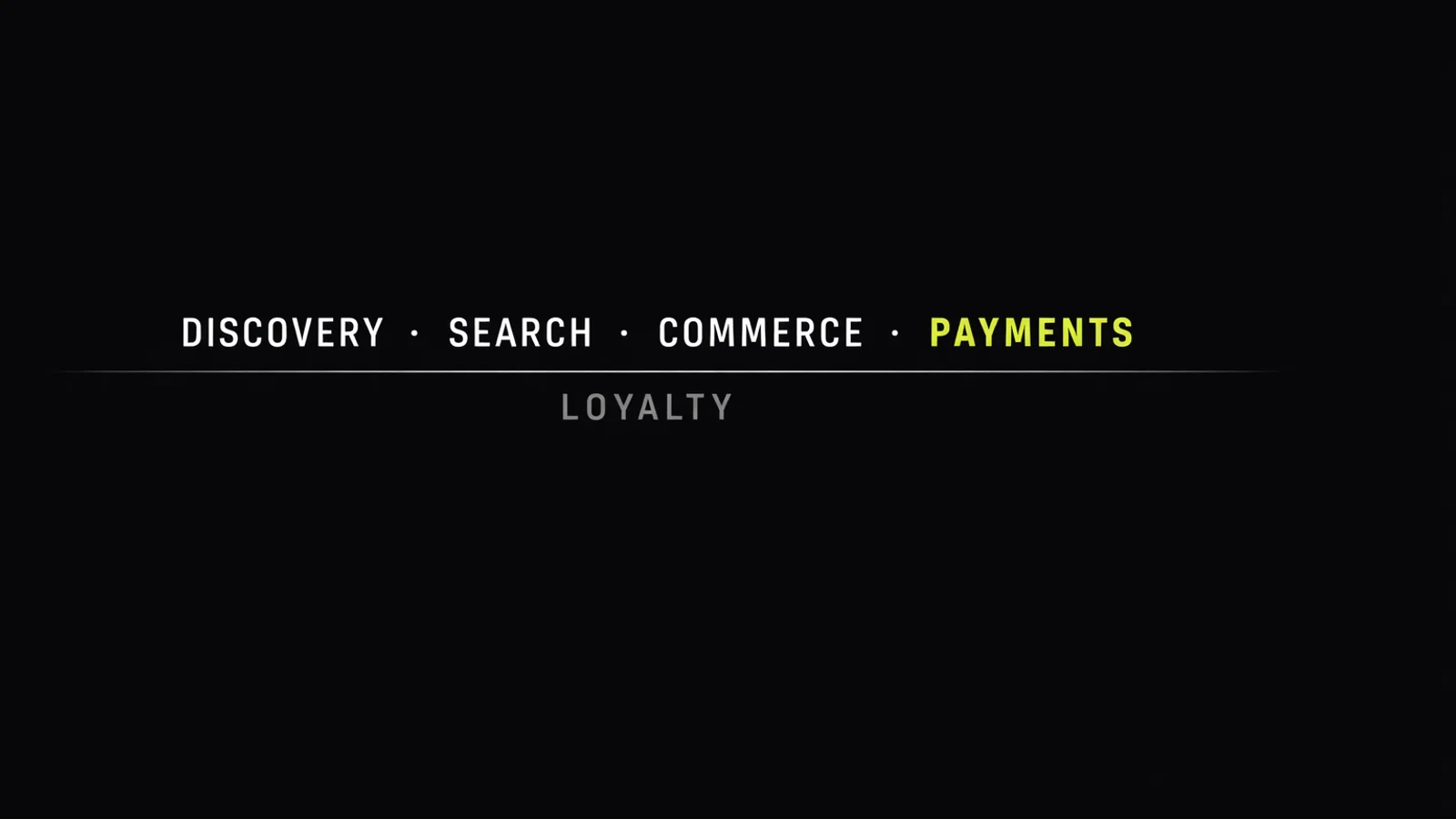
The consumer commerce lifecycle has five stages: Discovery, Search, Commerce, Loyalty, and Payments. Each one was built for a human shopper who browses, reads, and clicks. In 2026, a growing share of that shopping is done by AI agents acting on a consumer’s behalf, and every stage is being rebuilt for a buyer who is a machine. Discovery becomes a question of whether an agent can read your brand at all. Search becomes Answer Engine Optimization. Commerce becomes autonomous checkout. Payments become machine-to-machine settlement. And loyalty turns out to be the layer the agent reads first, before any of the others run. We work the whole lifecycle, with the NCTR ecosystem as the proof we run at consumer scale.
Most commerce vendors own one stage. The agent era is rewriting all five at once, which is why the lifecycle, not any single tool, is the right frame for what is happening.
The lifecycle is the frame
Brands already know the commerce lifecycle, even if they have never seen it named in five words. A shopper discovers a brand, searches within it, buys something, comes back, and pays. Discovery, Search, Commerce, Loyalty, Payments. For two decades the work at each stage assumed a person doing the shopping: a person who scrolls a results page, reads a product description, fills a cart, and remembers a brand they liked.
That assumption is breaking across all five stages at the same time. When an agent shops on a consumer’s behalf, it does not scroll, skim, or remember the way a person does. It reads, compares, and decides at machine speed, using data, not impressions. Each stage has to be rebuilt for that reader. Taking them one at a time shows why this is a lifecycle problem, not a point-tool problem.
Discovery: can an agent read your brand at all
Discovery used to mean being browsable: a findable site, a tidy storefront, an ad a person might notice. In the agent era, discovery means being a machine-readable asset. An agent surveying the market pulls candidate brands and reads what it can parse about each one. A brand whose catalog, content, and offers are structured for retrieval gets surfaced. A brand that is only legible to a human browser is invisible to the agent, no matter how good the product is.
The Bounty Hunter and Beacon model is the working reference: Beacon makes a merchant’s catalog agent-readable on Shopify and WooCommerce so an agent can actually see what the brand sells. Browser-style discovery does not disappear overnight, but the share of it that runs through an agent grows every quarter, and that share rewards structure over polish.
Search: SEO becomes AEO
Inside discovery sits search, and search is changing fastest. The old discipline, SEO, optimized for a human scanning ten ranked links and clicking one. The new discipline, Answer Engine Optimization, optimizes for an agent reading structured data and citing brands in the answer it gives its user. There is no page of links to rank on and often no click to win. There is the answer, and whether your brand is in it.
This is the stage where “Google search becomes obsolete” stops being a slogan and becomes an operating reality. A brand wins Search now by being readable, trustworthy, and specific enough that the agent names it. We have written a fuller piece on what that shift means in SEO is becoming AEO.
Commerce: the cart moves to the agent
Once an agent has discovered and compared, it transacts. In-chat purchase through assistants, autonomous checkout, and protocol-level standards like the Universal Commerce Protocol from Shopify and Google are standardizing how an agent touches a cart. The brand’s job shifts from designing a checkout a person enjoys to being transactable by a machine that never sees the page.
Beacon is the live example on the studio side: an agent-readable surface on Shopify and WooCommerce that lets an agent actually complete the buy. A brand that is discoverable but not transactable by an agent has won attention it cannot convert.
Loyalty: the layer underneath the frame
Loyalty is the fourth stage on the recognition frame, and it is also something more than a stage. In the agent era, loyalty is the layer the agent reads first, before discovery even runs. An agent deciding which brands make the consideration set reads loyalty state, identity, status, history, ownership signals, to decide which brands belong in the answer at all. That is the identity handshake between brand, customer, and agent, and it happens before the consumer sees a single option.
This is why the studio treats loyalty as the foundation of the lifecycle rather than a points program bolted on after the sale. NCTR is the version running in production: Wingman reads NCTR loyalty state to decide which brands surface in the Bounty Hunter app. Loyalty as the layer the agent checks first, today.
Payments: machine-to-machine settlement
The last stage is settlement, and it is going agent-native too. Agent-mediated payment rails, the x402 effort from Coinbase and the Linux Foundation among them, are being built to settle transactions an agent completes on a human’s behalf. The NCTR ecosystem settles on Base today and is positioned as the consumer proof point of x402. For a brand, payments fluency in the agent era means being able to accept a transaction an agent initiates and settle it cleanly, machine to machine.
What a brand does about it
The point of seeing all five stages together is that no single fix covers the agent shift. A brand can make its catalog readable and still be untransactable. It can win citations and still be invisible to the agent at the consideration step because its loyalty signals are not machine-readable. The lifecycle is being rebuilt as a whole, so the work has to read as a whole.
A practical order: make the brand readable (Discovery and Search), make it transactable (Commerce and Payments), and make its loyalty signals legible so it makes the consideration set before discovery even runs. We work this across the full lifecycle, which is why the studio frame, not a point tool, is the one we use. If you want to see where your brand stands across the five stages, talk to the studio, or read how we work and the Human-to-Agent Shopping POV underneath all of it.
Key Takeaways
- The consumer commerce lifecycle has five stages, Discovery, Search, Commerce, Loyalty, and Payments, and the agent era is rebuilding all five at once.
- Discovery now means being machine-readable; an agent surfaces brands it can parse and skips the ones it cannot.
- Search becomes Answer Engine Optimization: the win is being cited in the agent’s answer, not ranking on a page.
- Commerce moves to autonomous and in-chat checkout, standardized by efforts like the Universal Commerce Protocol; Payments move to machine-to-machine settlement on rails like x402.
- Loyalty is the layer the agent reads first, the identity handshake that decides which brands make the consideration set before discovery even runs.
FAQ
What is the agentic commerce lifecycle?
The agentic commerce lifecycle is the five-stage model of consumer commerce, Discovery, Search, Commerce, Loyalty, and Payments, as it is being rebuilt for AI agents that shop on a consumer’s behalf. Each stage that was designed for a human browser is being re-engineered for a machine reader that parses data, compares at speed, and decides without scrolling a page.
What changes at each stage when an agent does the shopping?
Discovery becomes a question of machine-readability rather than browsability. Search becomes Answer Engine Optimization, where citation replaces ranking. Commerce becomes autonomous and in-chat checkout. Payments become machine-to-machine settlement. Loyalty becomes the layer the agent reads first to decide which brands make the consideration set.
Why use a lifecycle frame instead of a single tool?
Because the agent era rewrites all five stages at the same time. A brand can be readable but untransactable, or transactable but invisible at the consideration step. Owning one stage does not solve the shift; the work has to span the lifecycle, which is why we work it end to end rather than as a point tool.
Where does loyalty fit in the lifecycle?
Loyalty is the fourth named stage and also the layer underneath the whole frame. An agent reads loyalty state, identity, status, and ownership signals, before discovery runs, to decide which brands belong in the answer. That is why the studio treats loyalty as the foundation of the lifecycle rather than a points program added after a sale.
What should a brand do first?
Make the brand readable across Discovery and Search, make it transactable across Commerce and Payments, and make its loyalty signals machine-readable so it makes the consideration set before discovery runs. Starting with an audit of what an agent can actually read across your surfaces is the most common first step.