TL;DR
When an AI agent shops on a consumer’s behalf, it does not stop at finding products. It fills the cart and completes the purchase. Autonomous and in-chat checkout, through assistants like ChatGPT and Perplexity and through protocol standards like the Universal Commerce Protocol from Shopify and Google, are standardizing how an agent touches a cart and pays. Payment rails such as the x402 effort from Coinbase and the Linux Foundation are being built to settle those transactions machine to machine. A brand’s job shifts from designing a checkout a person enjoys to being transactable by a machine that never sees the page. We build for that shift, with the NCTR ecosystem settling on Base today as the proof.
The brand that gets discovered but cannot be transacted by an agent has won attention it cannot convert.
The cart moves to the agent
For years, the checkout was a design problem aimed at a person: reduce friction, cut form fields, reassure the buyer, win the click on the buy button. Every one of those moves assumed a human at the keyboard making the final call.
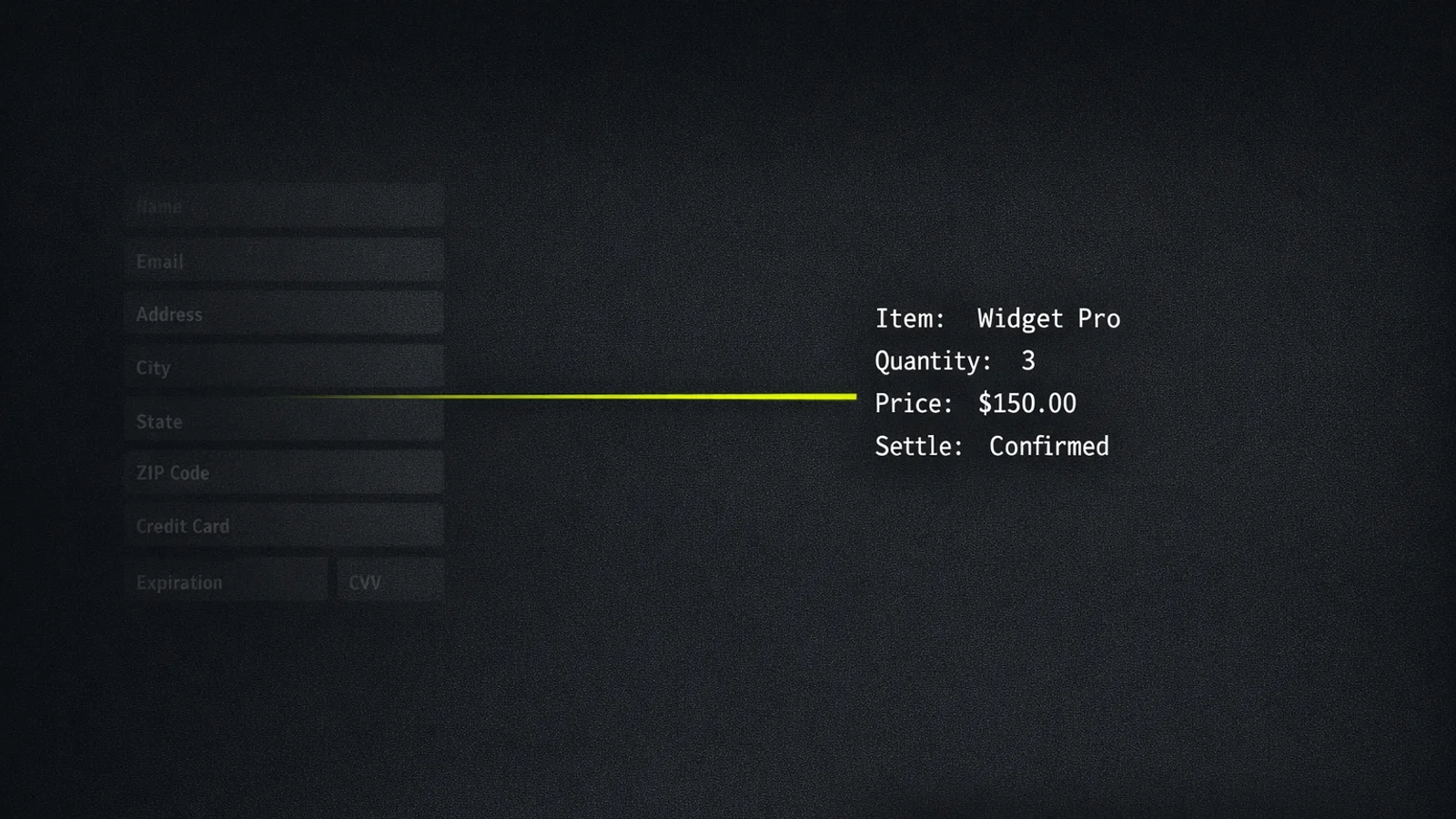
In an agent-run purchase, that human is not there. A consumer hands an agent a goal and a budget, and the agent does the rest: it compares, decides, fills the cart, and completes the order. The checkout experience the brand spent years polishing is shown to no one. What matters instead is whether the agent can complete the transaction at all, cleanly, without a human in the loop to nudge it past a broken step. The cart has moved from the shopper to the agent, and the work has moved with it.
In-chat and autonomous checkout, today
This is not a forecast. In-chat purchase is live: assistants now let a consumer buy inside the conversation, and agent operators complete multi-step purchases on a user’s behalf. Protocol aggregation efforts give agents a consistent way to transact across many retailers rather than learning each storefront one at a time. The demand side, the agents and assistants doing the buying, is already in market.
What that demand side needs from a brand is a surface it can transact against. Beacon is the live example on the studio side: an agent-readable surface on Shopify and WooCommerce that lets an agent see the catalog and complete the buy. Discovery gets the brand onto the agent’s radar; a transactable surface is what turns that into an order.
The standards forming underneath
Autonomous checkout only scales if agents and storefronts agree on how a cart and a payment are handled. Two open efforts are shaping that agreement.
The Universal Commerce Protocol, from Shopify and Google, is the emerging standard for how an AI agent touches a retail cart and checkout securely. It gives agents a common way to add items, confirm an order, and complete a purchase across participating storefronts, rather than reverse-engineering each one.
On the payment side, x402, an open effort from Coinbase and the Linux Foundation with a founding coalition that includes Stripe, Cloudflare, Google, AWS, Microsoft, Visa, Mastercard, and Shopify, is building an agent-native rail for settling transactions over HTTP. The NCTR ecosystem is positioned as the consumer proof point of x402 and settles on Base today.
We build on Shopify and WooCommerce and are positioned to be aligned with these standards as they mature. The point for a brand is not to pick a protocol. It is to be ready for the world these protocols are standardizing, where an agent transacts the same way everywhere.
What a brand makes transactable
Being discoverable and being transactable are two different states, and a brand can have the first without the second. The work of becoming transactable comes down to a few things:
- A machine-completable purchase path. The steps an agent takes to add an item, confirm, and pay have to work without a human to clear a broken field or a surprise interstitial. A checkout that depends on a person reading the screen is a dead end for an agent.
- Structured, current cart data. Price, availability, variants, and fulfillment have to be accurate and machine-readable at the moment the agent transacts, not just at the moment a human would have browsed.
- A settlement path an agent can use. The brand needs to accept a transaction an agent initiates and settle it cleanly, which is where the agent-native payment rails come in.
Loyalty sits underneath even this: the signals that tell an agent a consumer already belongs to the brand are read before the cart forms, deciding whether the brand is in the running at all. But at the Commerce and Payments stages specifically, the question is narrow and concrete: when an agent tries to buy, can it.
NCTR is the proof we build for this end to end: Beacon makes the catalog agent-readable and transactable on Shopify and WooCommerce, and the ecosystem settles on Base. That is autonomous commerce in production, not a slide. If you want to see whether an agent can actually complete a purchase from your brand, talk to the studio, or read the Human-to-Agent Shopping POV underneath the shift. Platform teams building the rails can start at for platforms.
Key Takeaways
- In an agent-run purchase, the agent fills the cart and completes the order; the checkout a brand designed for a human is shown to no one.
- In-chat and autonomous checkout are live today through assistants and agent operators; the demand side is already in market.
- Two open standards are shaping how this scales: the Universal Commerce Protocol from Shopify and Google for the cart and checkout, and x402 from Coinbase and the Linux Foundation for the payment rail.
- A brand becomes transactable by offering a machine-completable purchase path, structured current cart data, and a settlement path an agent can use.
- NCTR is our working proof: Beacon makes catalogs agent-readable and transactable on Shopify and WooCommerce, and the ecosystem settles on Base.
FAQ
What is autonomous checkout?
Autonomous checkout is the completion of a purchase by an AI agent acting on a consumer’s behalf, without a human clicking through the final steps. The agent fills the cart, confirms the order, and triggers payment, which means the brand’s checkout has to work for a machine rather than a person reading the screen.
What is the Universal Commerce Protocol?
The Universal Commerce Protocol (UCP), from Shopify and Google, is the emerging standard for how an AI agent touches a retail cart and checkout securely. It gives agents a common, secure way to add items, confirm orders, and complete purchases across participating storefronts instead of learning each one individually.
What is x402 and how does it relate to agent payments?
x402 is an open agent-native payment rail built over HTTP, an effort from Coinbase and the Linux Foundation with a founding coalition including Stripe, Visa, Mastercard, Shopify, and others. It is designed to settle transactions an agent completes on a human’s behalf, machine to machine. The NCTR ecosystem is positioned as its consumer proof point and settles on Base today.
What does a brand need to be transactable by an agent?
A machine-completable purchase path that does not depend on a human clearing a broken step, structured and current cart data (price, availability, variants, fulfillment), and a settlement path an agent can use. Being discoverable is not the same as being transactable; both are required to convert an agent-run shopping task into an order.
Is in-chat agent checkout actually happening yet?
Yes. In-chat purchase inside assistants and multi-step buying by agent operators are live in 2026, and protocol aggregation gives agents a consistent way to transact across retailers. The demand side is already shopping; the open question for most brands is whether their surface can complete the transaction when an agent tries.